Tag: Saudi Arabia
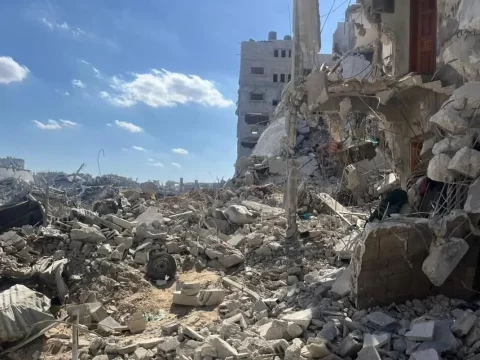
Smarter Finance Needed To Rebuild Post-Conflict Middle East
Traditional model — grand pledging conferences followed by sluggish bilateral transfers — is obsolete and must be left behind…
Middle East Debt Deals Hang in Limbo as Washington Sets the Clock
Gulf stock markets rallied in September, following the Federal Reserve’s rate cut and renewed optimism that further rate cuts were to come. Behind the cheer lies a more complicated reality: debt issuance across the Middle East — sovereign, corporate and family-owned — is being delayed, restructured or burdened by high U.S.-imported borrowing costs…

Islamic Equity Investors Face A Difficult Choice
Islamic finance has made much progress over the past two decades across banking, asset management and capital markets. There are now some $5tn of Islamic finance assets in an industry grounded in faith-based principles, according to estimates from the LSEG’s Islamic Finance Development Indicator. But Islamic finance — and in particular equity investing — needs further conversation about how to balance ethical integrity with the financial complexity of today’s world…
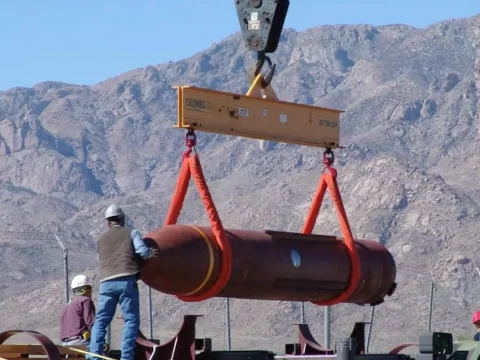
Under The Mountain: What Israel Needs And Trump Must Decide
As Israel escalates its confrontation with Iran, Donald Trump faces a defining foreign policy test. The choice before him is not between diplomacy and war. Diplomacy has largely been exhausted; war, in some form, is already underway. The real question is more consequential and more concrete: should the United States supply Israel with its most formidable non-nuclear weapon, the 30,000-pound bunker buster, which only America has the air power capability to deliver…

Sukuk Finance’s New Framework Risks Disruption
The global sukuk market for Islamic finance faces a pivotal moment. A new framework from the Accounting and Auditing Organization for Islamic Financial Institutions (AAOIFI) threatens to destabilise a $1tn market that has become a vital funding source for sovereigns and corporates across the Middle East, Asia and beyond. The spiritual imperative behind proposed changes to AAOIFI’s Shariah Standard 62 is deeply respected. They seek to make sukuk debt appear less like debt with charged interest, something that is prohibited under Islamic law. However, the real-world effects could fracture a market that has flourished precisely because of its consistency and investor confidence. The stakes for global Islamic finance could not be higher…

Marco Rubio’s Proposed Reshuffle At State Offers A Huge Opportunity In Africa
If America wants to stay competitive, it must rethink its approach to Africa, and fast…

Why the U.S. Needs a Sovereign Wealth Fund
The United States spends trillions of dollars annually on military and foreign aid. Yet, it lacks the financial tools necessary to secure its economic future. While the Inflation Reduction Act and CHIPS Act provide welcome investments in clean energy and semiconductors, they fail to address the more significant, long-term need for sustained and strategic industrial policy. The United States needs a sovereign wealth fund (SWF) — a national investment vehicle capable of turning tax dollars into high-yield returns that can reshape the economy for decades to come…
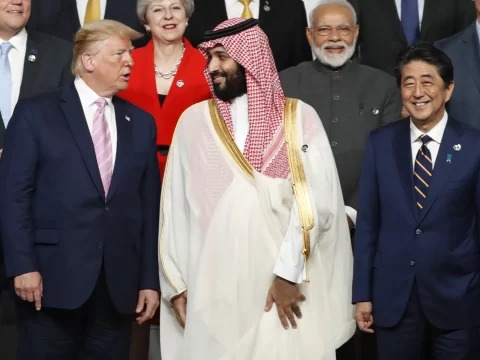
Trump’s Return Signals New Opportunities for Middle East Ties
As Donald Trump heads back to the White House, leaders across the Middle East anticipate the revival of a pragmatic partnership centered on economic growth, security, and regional stability. Trump’s first term resonated with Gulf leaders and beyond, emphasizing results over ideology—a stark contrast to the Biden administration. His tenure’s signature accomplishments, including the Abraham Accords, a robust stance on Iran, and business-driven diplomacy, are seen as a roadmap for renewed progress in the region…
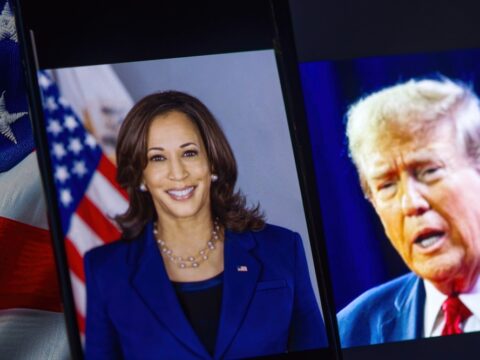
Top Foreign Policy Issues Facing Next U.S. President on Day 1
The 2024 U.S. presidential election is in full swing with candidates talking economic policy but partially skirting round foreign policy challenges. The foreign policy debate has been limited with most commentary focused on whether the policy will be more “arrogant” or “predictable”, neither of which are informative descriptions for a candidate or directionally insightful as a strategy. The next U.S. president will face several key issues on day 1 and, while temperament can be part of the test, there is a question of policy answers and details…